Understanding how Arizona’s court system works is critical if you or a loved one is facing criminal charges. From municipal courts handling misdemeanor offenses to felony cases prosecuted in Superior Court, each level of the system has specific procedures, deadlines, and strategic considerations.
This resource explains how Arizona courts are structured, how criminal cases progress, and what to expect if your case is filed in Maricopa County. If you are facing charges, the experienced Phoenix criminal defense attorneys at Feldman Royle Ahl can guide you through every stage of the process.
Arizona’s judicial system is organized into several levels, each with different authority and jurisdiction.
Municipal courts handle misdemeanor offenses that occur within city limits, including:
For example, the Phoenix Municipal Court handles misdemeanor cases arising within the City of Phoenix.
Justice Courts have limited jurisdiction and typically handle:
The Superior Court is Arizona’s trial court of general jurisdiction and handles:
In Maricopa County, felony charges are filed in Maricopa County Superior Court.
If a conviction is appealed, the case may proceed to the Arizona Court of Appeals. The Arizona Supreme Court is the highest court in the state and reviews select cases involving significant legal issues.
Every criminal case follows a general procedural path, though timelines vary depending on the charges and complexity.
Cases often begin with a police investigation. In white-collar or fraud matters, investigations may involve subpoenas, audits, or financial reviews before any arrest occurs.
A person may be arrested or issued a summons to appear in court.
This typically occurs within 24 hours of arrest. The court:
At arraignment, the defendant enters a plea of guilty, not guilty, or no contest.
Both sides exchange evidence. This may include:
Attorneys may file motions to:
Pretrial litigation often determines the strength of the prosecution’s case.
Some cases resolve through negotiated agreements. Others proceed to jury trial, where the prosecution must prove guilt beyond a reasonable doubt.
If convicted, sentencing occurs before a judge. Arizona felony sentencing ranges vary depending on the offense classification and prior history.
After conviction, a defendant may pursue appellate review to challenge legal errors.
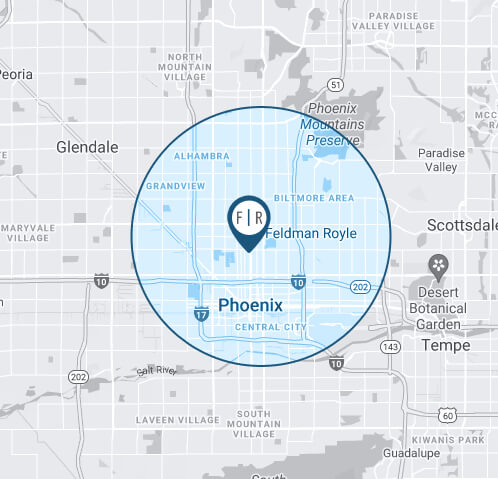
Because many of our clients face charges in Phoenix and surrounding cities, understanding local court procedures is especially important.
Handles misdemeanor offenses occurring within Phoenix city limits.
Handle limited jurisdiction criminal matters and certain preliminary felony proceedings.
All felony prosecutions are handled in Superior Court. These include:
Felony cases in Maricopa County may be prosecuted by the Maricopa County Attorney’s Office or, in certain matters such as Medicaid-related fraud, by the Arizona Attorney General’s Office.
Local court procedures include strict disclosure deadlines, motion practice timelines, and trial scheduling rules that must be carefully managed.
If you are charged with a crime in Arizona, you should expect:
Early legal representation can significantly impact the outcome of your case. In some situations, strategic intervention early in the investigation stage may prevent formal charges from being filed.
The attorneys at Feldman Royle Ahl represent individuals throughout Maricopa County at every stage of criminal proceedings.
Felony charges are handled in Superior Court. In Phoenix and surrounding areas, felony cases are filed in Maricopa County Superior Court.
At arraignment, the court formally advises the defendant of the charges and asks for a plea. Future court dates are scheduled.
Timelines vary depending on the complexity of the case, the seriousness of the charges, and whether the matter proceeds to trial. Some misdemeanor cases resolve in a few months, while complex felony cases may take significantly longer.
Yes. If evidence was obtained through an unlawful search, seizure, or interrogation, a defense attorney may file a motion to suppress that evidence.
Even misdemeanor convictions can result in jail time, fines, probation, and a permanent criminal record. Consulting with a defense attorney is strongly recommended.
In some felony cases, a preliminary hearing may be held to determine whether sufficient evidence exists to proceed to trial. Many felony cases instead proceed by grand jury indictment.
Depending on the facts, legal issues, and procedural defects, charges may be reduced or dismissed. Each case must be evaluated individually.
Facing criminal charges can be overwhelming. Court procedures are complex, deadlines are strict, and the consequences of conviction can be life-altering.
Whether your case is in municipal court or Maricopa County Superior Court, the experienced Phoenix criminal defense attorneys at Feldman Royle Ahl are prepared to protect your rights and guide you through the process.
Contact our office today to schedule a confidential consultation.