

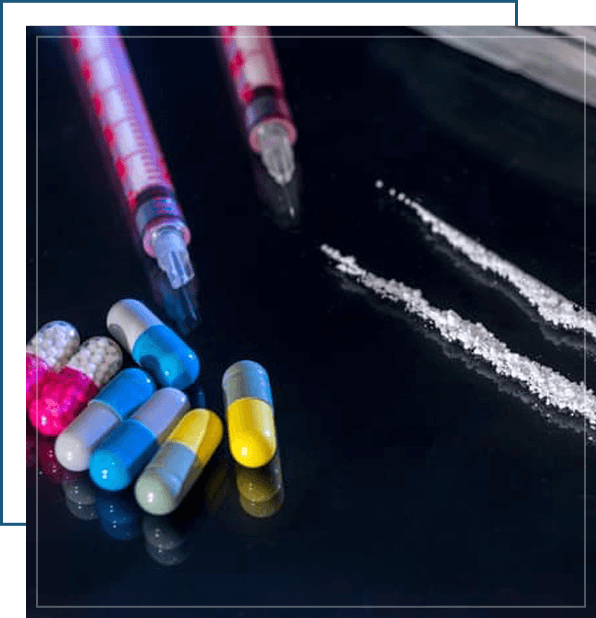

Drug crimes in Arizona run the gamut from misdemeanors to serious felonies, although most drug crimes are felonies. A charge will be a function of a number of factors, including the conduct alleged, the particular drug involved, and the amount you are alleged to have possessed.
As drug crime defense lawyers in Phoenix, AZ, we protect your rights against all types of drug charges. We begin by examining the specific allegations and then build a tailored defense strategy for your case.
Arizona law surrounding drug crimes is complicated, making it essential to have a skilled drug crimes defense lawyer on your side. In addition to the complexities of the statutes themselves, many additional legal defenses are available to help your case, such as
Dangerous drugs under Arizona law include methamphetamine, amphetamine, LSD, MDMA (ecstasy), PCP, anabolic steroids, mescaline, and other controlled substances that are not classified as narcotic drugs. Under A.R.S. § 13-3407, the following acts are felonies:
Possession or use of a dangerous drug is a Class 4 felony. For first-time offenders not involving methamphetamine, amphetamine, LSD, or PCP, the court may designate the offense as a Class 1 misdemeanor or grant probation. Possession of a dangerous drug for sale is a Class 2 felony carrying 3 to 12.5 years in prison. When the amount meets the statutory threshold, mandatory prison applies, and probation is not available. Possession of equipment or chemicals for manufacturing a dangerous drug is a Class 3 felony. Manufacture of a dangerous drug is a Class 2 felony. When methamphetamine is involved, mandatory flat-time prison applies with no early release. Transportation of a dangerous drug for sale is a Class 2 felony.
See our drug manufacturing defense page and felony drug possession defense page for detailed information on each charge type.
Narcotic drugs under Arizona law include heroin, cocaine, fentanyl, oxycodone, hydrocodone, morphine, codeine, and other opioids and opiates. Note that methamphetamine and LSD are classified as dangerous drugs under A.R.S. § 13-3407, not as narcotic drugs. Under A.R.S. § 13-3408:
Possession or use of a narcotic drug is a Class 4 felony carrying 1 to 3.75 years in prison for a first offense. Probation is available for first-time offenders who qualify. Possession of a narcotic drug for sale is a Class 2 felony. When the amount meets the statutory threshold, probation is not available and mandatory prison applies. Possession of equipment or chemicals for manufacturing a narcotic drug is a Class 3 felony. Manufacture of a narcotic drug is a Class 2 felony with mandatory prison. Acquisition of a narcotic drug by fraud, deceit, misrepresentation, or subterfuge, including obtaining narcotics through a fraudulent prescription, is a separate felony under A.R.S. § 13-3408(A)(6). Transportation of a narcotic drug for sale is a Class 2 felony.
See our felony drug possession defense page and drug trafficking defense page for more information.
Drug trafficking in Arizona encompasses the sale and transportation of controlled substances for sale under both A.R.S. § 13-3407 and A.R.S. § 13-3408. Both transportation for sale and possession for sale are Class 2 felonies carrying 3 to 12.5 years in prison for a first offense. When amounts meet the statutory threshold, probation is unavailable and mandatory prison applies. Arizona's position as a border state means trafficking charges frequently involve federal agencies and federal prosecution under the Controlled Substances Act (21 U.S.C. § 841) alongside state charges.
See our drug trafficking defense page for detailed information.
Manufacturing dangerous drugs under A.R.S. § 13-3407 is a Class 2 felony regardless of the drug type. Manufacturing narcotic drugs under A.R.S. § 13-3408 is also a Class 2 felony. When methamphetamine is involved, the sentence is mandatory flat time with no probation and no early release. Possession of equipment or chemicals used for manufacturing is charged separately as a Class 3 felony, meaning defendants frequently face both manufacturing and equipment possession charges simultaneously, each carrying independent sentencing exposure.
See our drug manufacturing defense page for more information.
Using any wire or electronic communication, including phone calls, text messages, social media apps, and email, to facilitate a felony drug transaction is a separate criminal charge under A.R.S. § 13-3417. This charge is a Class 4 felony when the underlying drug felony is Class 4 or higher. When the underlying felony is Class 5 or 6, the A.R.S. § 13-3417 charge carries the same classification as the felony facilitated. Because investigators frequently intercept communications before making arrests in trafficking cases, § 13-3417 counts are routinely stacked alongside possession for sale and trafficking charges, with each separate communication potentially charged as a separate count.
See our wiretap defense page for more information.
Possession of drug paraphernalia, including pipes, bongs, syringes, scales, baggies, and other items used to ingest, store, or manufacture controlled substances, is a Class 6 felony in Arizona under A.R.S. § 13-3415. Paraphernalia charges are routinely filed alongside possession charges and can affect eligibility for diversion programs under A.R.S. § 13-901.01.
Obtaining a prescription-only drug through fraud, misrepresentation, or a forged prescription is a misdemeanor offense under A.R.S. § 13-3406 when the drug is not also classified as a narcotic or dangerous drug. When the drug obtained is a narcotic, charges escalate to A.R.S. § 13-3408 with felony penalties.
See our prescription fraud defense page for more information.
When drug offenses cross state lines or involve federal agencies such as the DEA, FBI, or Homeland Security Investigations, defendants face prosecution in the U.S. District Court for the District of Arizona under the Controlled Substances Act (21 U.S.C. § 841 et seq.). Federal drug charges carry mandatory minimum sentences, ranging from 5 to 40 years or 10 years to life depending on drug type and quantity, that Arizona state law does not impose. Feldman Royle Ahl defends clients in both state and federal proceedings simultaneously. Call (602) 899-8000.

Drug-related crimes are investigated by local police, state law enforcement, and federal agencies like the DEA (Drug Enforcement Administration).
The four major drugs linked to crimes are cocaine, heroin, amphetamines, and marijuana.
Drug trafficking is the most serious charge, carrying severe penalties, including long prison sentences and hefty fines.
In Arizona, "expungement" is not the typical term for clearing a criminal record. Instead, the legal process is referred to as "setting aside" a prior conviction. This action allows an individual to have their rights restored after a drug crime conviction, effectively providing them with a second chance.
